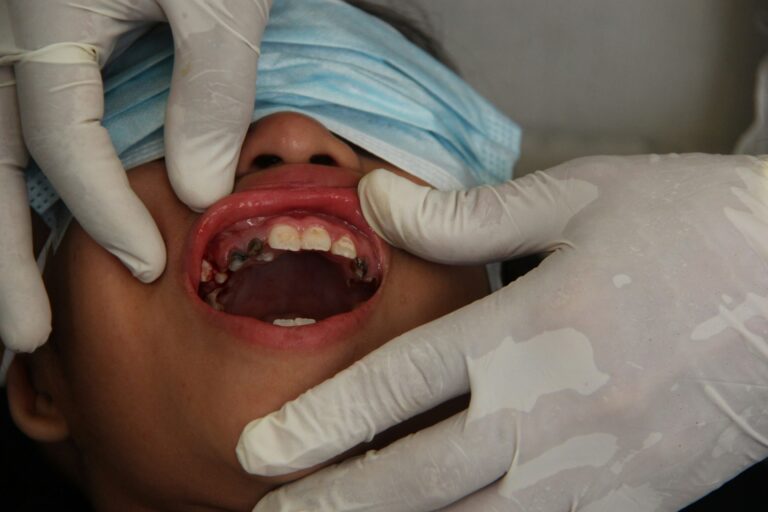

Tooth decay in adults is the most common health condition on earth, says the World Health Organization. Nearly 3.7 billion people live with some form of oral disease.
Whether you cracked a molar on a hard object or had a tooth fall out years ago but just learned to chew on the other side, things will start to change. The adjacent teeth will move, changing your bite. Slowly, the bone will begin to resorb in the gap. Crowns and bridges are used by dentists to overcome these dental problems. This guide outlines the process of having a crown and bridge, what is the difference between them and how to decide which dental treatment will be best for you.
What Is a Dental Crown?
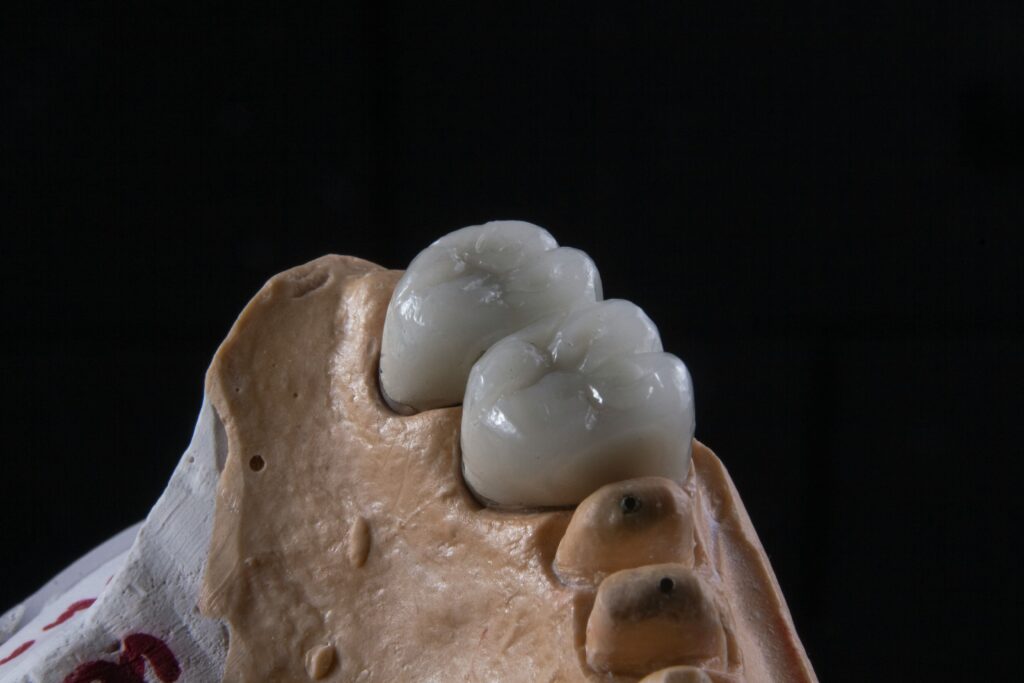
A crown is a hard cover that covers the visible section of your tooth.
After reshaping the tooth, a mold or scan is taken and sent to the lab. Your tooth would be covered with a temporary crown for 1-2 weeks while the permanent crown is made.
Crowns are required when there is not enough filling to support the tooth, if there is deep decay, cracks and/or your tooth has become worn from years of clenching. Crowns can also be placed on top of implants to secure bridges.
What Is a Dental Bridge?
A bridge replaces a missing tooth. A false tooth (known as a pontic) is bonded to two crowns. The teeth that support the bridge are known as the abutments. Unlike a denture, the bridge doesn’t come out of your mouth.
Usually bridges are 3 units. This means there are two crowns with the false tooth in the middle. This replaces one missing tooth. If there is a larger gap a longer bridge will be required. The teeth supporting the bridge will have to work much harder so your dentist will check the strength of your teeth to see if a bridge would be suitable.
Types of Dental Bridges
| Type | How it is held in place | Good fit when |
| Traditional | Crowns on both neighbouring teeth | The neighbours are sound, or already need crowns |
| Cantilever | A crown on one side of the gap only | Only one healthy neighbour is available. Used sparingly, because it puts leverage on a single tooth |
| Maryland (adhesive) | Small wings bonded behind the neighbouring teeth | The neighbours are healthy and you want minimal drilling, usually at the front |
| Implant-supported | Dental implants on each side of the gap | There’s enough healthy jawbone and you’d like to leave natural teeth untouched |
Crown or Bridge: Which One Do You Need?
| Option | What it treats | Need healthy neighbours? | Surgery? |
| Crown | A damaged tooth that is still there | No | No |
| Bridge | One or more missing teeth | Yes | No |
| Implant | A missing tooth | No | Yes, a minor procedure |
A bridge tends to cost less than having an implant, as there is no surgery involved, so you don’t need to wait for healing. Your dentist will have to file down your surrounding natural teeth to put the bridge in place. With an implant, you don’t need any support. How healthy your surrounding teeth are will affect which option would be the most cost-effective.
Zirconia vs Ceramic Crowns
Both materials are tooth-coloured and have no metal inside. What separates them is strength.
Zirconia is tough. Dentists often pick it for back teeth, where chewing force is highest. All-ceramic crowns, including lithium disilicate (you may hear the name e.max), blend well with natural enamel at the front. Porcelain fused to metal has a metal core under the porcelain.
| Material | Where it works best | Appearance | Worth knowing |
| Zirconia | Back teeth and bridges | Natural, slightly more opaque | Resists chipping well, especially when made from one solid block |
| All-ceramic (lithium disilicate) | Front teeth and visible smiles | Most lifelike translucency | Less suited to long bridges |
| Porcelain fused to metal (PFM) | Back teeth, and bridges where strength is the priority | Good, but layered | Metal margin can show over time |
How Long Do Crowns and Bridges Last?
Crowns and bridges can last 10 to 15 years, and some can go even longer. A pooled analysis of prospective studies on CAD/CAM ceramic bridges found roughly 79% to 82% still working at ten years.
Difference Between Crowns and Bridges
| Feature | Dental Crown | Dental Bridge |
| Main Goal | Covers and saves one damaged tooth. | Replaces one or more missing teeth. |
| How It Works | Fits over a single prepped tooth like a cap. | Uses a fake tooth held by two end caps. |
| Surrounding Teeth | Leaves neighboring teeth completely alone. | Requires filing down the teeth next to the gap. |
| Tooth Requirement | Needs your original tooth root underneath. | Needs strong teeth on both sides of the space. |
| Daily Flossing | Flosses normally between teeth. | Needs a floss threader or water flosser under the fake tooth. |
What Happens at the Dental Appointments
- Consultation and X-rays. The dentist checks the tooth, your gums, and your bite, then talks you through the options.
- Preparation. Under local anaesthetic, the tooth (or the teeth either side of a gap) is reshaped. You shouldn’t feel pain.
- Impression or digital scan. The shade is matched to your other teeth at this stage too.
- Temporary crown or bridge. It covers the prepared teeth while the lab makes the final piece.
- Fitting, usually one to two weeks later. The dentist checks the fit, the bite, and the colour, then cements it.
How to Look After a Dental Crown or Bridge
Brush your teeth twice a day and floss daily. Use a floss threader, small interdental brush or water flosser to floss underneath the bridge. If you suffer from bruxism/teeth grinding at night, ask us about a night guard. Regular check-ups will help us spot any issues with the edge of your crown quicker.
If a crown chips or comes loose, keep the piece and contact our emergency dentist service the same day.
When to See a Dentist in Lahore
Visit your dentist if you’re experiencing pain when biting down, or sensitivity to a crack in the tooth (you’ll be able to feel it with your tongue). If you’re constantly having fillings fall out or there’s a gap in the teeth next to it then make sure to book an appointmentvat Rahman & Rahman Dental Clinic.
If the problem is only cosmetic, like a stained or slightly chipped front tooth, dental veneers or other cosmetic dentistry may be a better option.
FAQs:
Does Getting a Crown Hurt?
No, usually it does not hurt. Your dentist will numb the area. You may feel sensitive to hot and cold for a few days after having your crown made. The gums may feel sore but this will not last long.
How Many Visits Does a Crown Take?
You will usually need two appointments. One to get the tooth prepped and scanned. The crown will then be fitted 1-2 weeks later. Whilst waiting a temporary crown will be placed.
Can a Tooth That Had a Root Canal Get a Crown?
Yes, often they will need a crown. The tooth can become fragile after a root canal, so a crown will help keep the tooth together.
Should I Choose a Three Unit Dental Bridge or an Implant?
A bridge is a faster option. There is no surgery involved. However you will need strong teeth either side. An implant will replace the tooth and will not affect any surrounding teeth. However implants will need healthy gums and bones. Whereas bridges will need healthy teeth. This will be decided at your examination.
How Do I Clean Under a Bridge?
Use floss threader to thread floss underneath the fake tooth. Or use an interdental brush or water flosser. This should be done everyday. Food will get stuck underneath causing decay and gum problems.
What Should I Do if My Crown Falls Off?
Place safely somewhere and call the dental clinic. Do not use any glue from home. Try and get proper assistance as soon as possible as the tooth could break or decay.